New Combi Boiler Bath: What Should You Check Before Choosing Your New System?
Choosing a new combi boiler is not simply a matter of picking a familiar brand or selecting the highest output available. A combi boiler needs to suit the property, household and existing heating system if it is to provide reliable heating and hot water.

Why you can trust our content
We understand that the boiler industry can be confusing, with plenty of outdated or misleading information. That’s why we rely only on trusted, proven sources to guide our advice and installations:
At a glance
Before making a decision, it is worth looking at your current system and considering how your household uses hot water. The number of bathrooms, size of the property, incoming water supply, boiler location and condition of the existing pipework can all influence whether a combi is suitable.
For homeowners researching a new combi boiler bath, understanding these practical considerations can make it easier to have a productive conversation with an installer and avoid choosing a system based on price alone.
Is a combi boiler suitable for your household?
A combi boiler provides central heating and hot water from a single appliance, without requiring a separate hot water cylinder. This can make it a practical option where space is limited or where the household has moderate hot water requirements.
However, a combi may not be the most suitable arrangement for every property. Larger households with several bathrooms and frequent simultaneous hot water demand may need to consider a different system configuration.
Before choosing a combi, think about:
- How many people live in the property?
- How many bathrooms or showers are regularly used?
- Are showers and taps likely to be used at the same time?
- How much hot water does the household typically use?
- Is storage space limited?
- Does the current boiler meet your hot water needs?
These questions provide a useful starting point before an installer assesses the property.
What boiler size does your property need?
Boiler output should be selected according to the property’s heating and hot water requirements. Bigger does not automatically mean better.
An oversized boiler may cost more to purchase without providing a meaningful benefit, while an undersized appliance may struggle to meet demand. With a combi boiler, hot water performance is particularly important because the appliance needs to heat water as it flows through the system.
The installer should consider both the property’s heating requirement and the household’s hot water demand before recommending an appropriate model.
What factors can affect boiler selection?
| Factor | Why it matters |
| Property size | Influences heating demand |
| Number of occupants | Helps indicate hot water demand |
| Bathrooms | Can affect simultaneous hot water use |
| Incoming water supply | Influences combi performance |
| Existing heating system | May affect installation requirements |
| Boiler location | Can affect flue and condensate arrangements |
| Heating controls | Need to be compatible with the new boiler |
There is no universal boiler output that is right for every home, so a property-specific assessment is important.
Does your water pressure matter?
Yes. A combi boiler heats mains water as it passes through the appliance, so the incoming water supply can affect the performance you experience at taps and showers.
If mains water flow is limited, installing a more powerful combi boiler will not necessarily solve the problem. The incoming supply itself needs to be assessed.
An installer can consider the available flow rate and pressure when determining whether a combi boiler is appropriate and what level of hot water performance can realistically be expected.
This is particularly useful where a household has experienced weak showers or inconsistent flow with its current system.
What should you check about the existing heating system?
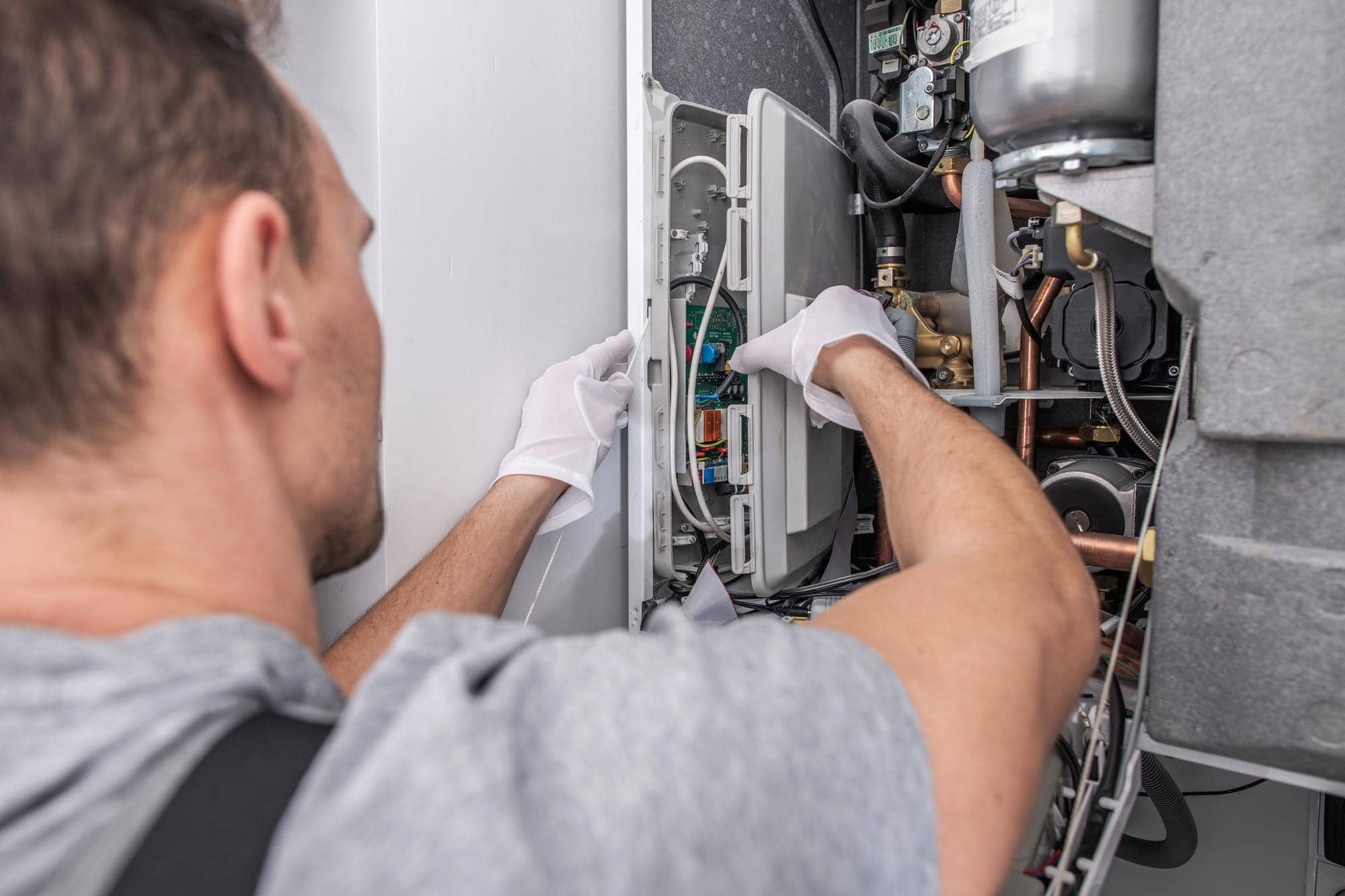
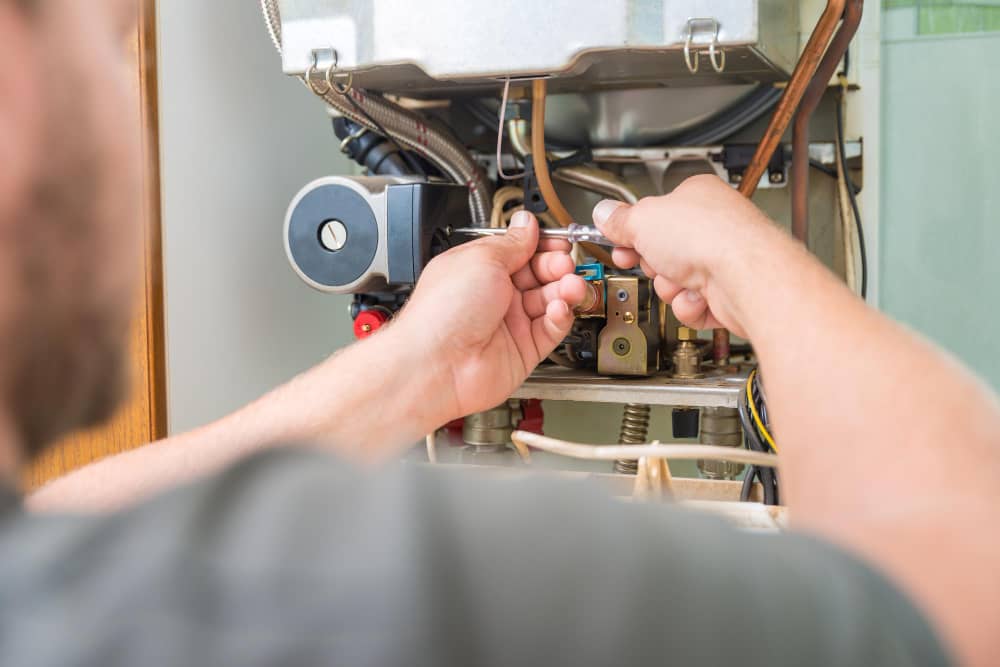
A replacement combi boiler needs to work with the wider heating system. The existing radiators, pipework, controls and other components should therefore be considered before installation.
Older systems can have pipework arrangements or components that require attention. This does not mean every replacement requires extensive changes, but the installer should identify anything that could affect the new boiler.
A pre-installation assessment can cover:
- Existing boiler type and location
- Condition of visible pipework
- Radiator performance
- Heating controls
- Flue arrangement
- Condensate drainage
- System pressure
- Access to the installation area
Addressing these matters before the installation date can reduce the likelihood of unexpected complications.
If you are unsure whether a combi boiler is suitable for your property, contact Ford Plumbing & Heating for advice based on your existing heating system and household requirements.
Let’s get started, Which fuel powers your boiler?
It just takes 30 Seconds
And then you can book a free consultation
Where should the new combi boiler be installed?
The existing boiler position may be suitable for the replacement, but it should not be assumed automatically.
The installer needs to consider access, servicing space, flue requirements and condensate drainage. The position should also work practically for the household.
Some homeowners may want to move the boiler to create storage space or improve the appearance of a room. Relocation is possible in many properties, but it can increase the amount of work involved.
Before approving a new position, ask:
- Is there sufficient access for servicing?
- Can the flue be installed correctly?
- Is condensate drainage practical?
- Will the location require new pipework?
- Will the position create additional installation work?
- Does the new location meet relevant requirements?
A suitable position should balance technical requirements with everyday practicality.
Do you need new heating controls?
A boiler replacement provides an opportunity to review your heating controls.
If the existing thermostat or programmer is old, unreliable or incompatible with the new appliance, replacing it may make sense. Depending on the system, there may be several compatible control options.
The goal is not necessarily to choose the most advanced controls available. Instead, the controls should be suitable for the boiler, straightforward to operate and appropriate for the household’s heating habits.
What should be included in combi boiler installation?
When comparing installation proposals, check the complete scope of work rather than focusing only on the boiler model.
A typical installation proposal may cover:
- Supply of the new boiler
- Installation labour
- Removal of the old boiler
- Flue installation or modification
- Necessary pipework alterations
- Condensate connection
- Heating controls where agreed
- System preparation where required
- Commissioning
- Relevant certification and documentation
The exact work will vary from property to property.
A clear quotation should also explain whether additional work is excluded and how unexpected requirements will be handled.
How should you compare different combi boiler models?
There is more to compare than the manufacturer’s name.
Look at the boiler’s heating output, hot water performance, physical dimensions, controls compatibility, warranty arrangements and suitability for your property.
It can be useful to ask an installer why a particular model has been recommended. The explanation should relate to your household and property rather than simply presenting a list of specifications.
Questions worth asking
- Why is this model suitable for my property?
- What hot water flow rate can I expect?
- Is the boiler output appropriate for my heating demand?
- Are my existing controls compatible?
- Will any pipework need changing?
- Is the current boiler position suitable?
- What servicing access is required?
- What documentation will I receive after installation?
These questions can help you understand the reasoning behind the recommendation.
What can affect the cost of a combi boiler replacement?
The final cost can vary depending on whether the replacement is straightforward or involves wider changes.
Factors that can influence the installation include:
- Boiler make and model
- Required boiler output
- Location of the appliance
- Pipework alterations
- Flue changes
- Heating controls
- System preparation
- Removal and disposal of the existing boiler
- Additional installation requirements
A like-for-like replacement may involve less work than changing from one type of heating system to another or moving the boiler to a new location.
Ford Plumbing & Heating can assess your existing system and explain which installation requirements are relevant to your property before you commit to a new combi boiler.
What should you prepare before the installation?
Once the boiler has been selected, preparation can make installation day easier.
Clear access to the existing boiler and any areas where pipework or controls will be worked on. If the boiler is being relocated, discuss any furniture or belongings that may need to be moved beforehand.
It is also useful to confirm:
- The expected installation date
- Which rooms will be affected
- Whether heating and hot water will be unavailable during the work
- Whether old equipment will be removed
- What documentation will be provided afterwards
- Who to contact if you have questions following installation
Good communication before the work begins helps avoid misunderstandings.
A typical Bath replacement scenario
Consider a household living in a traditional property where the existing combi boiler has become unreliable. The homeowners initially assume that replacing it with a larger model will improve hot water performance.
During the assessment, the installer checks the property’s heating demand and incoming water supply. The assessment shows that the household’s requirements can be met by a suitably selected combi boiler, while the existing boiler position can also be retained.
Rather than paying for unnecessary changes, the homeowners can proceed with a system selected around the property’s actual requirements.
Are there situations where a combi boiler may not be the best option?
Yes. A combi boiler may be less suitable where there is consistently high simultaneous hot water demand or where the incoming mains supply cannot provide the required flow.
For some larger households, a system boiler with a hot water cylinder may offer a more appropriate arrangement. The right decision depends on the property and how the household uses heating and hot water.
The important thing is to assess the whole system rather than deciding on a boiler type before the property’s requirements have been considered.
Conclusion: Choose the System Around Your Home
A new combi boiler should be selected around the needs of the property and household rather than simply choosing the biggest or cheapest available model. Hot water demand, water pressure, heating requirements, boiler position, controls and the condition of the existing system all deserve consideration.
For homeowners researching a new combi boiler bath, a professional assessment can provide useful information before a final decision is made. A properly planned combi boiler installation bath should take account of the complete heating system and the practical requirements of the property.
Ford Plumbing & Heating can help homeowners understand the available options and installation requirements. If you are considering a new combi boiler, contact the team to discuss your property and request tailored advice.
Related articles
Let’s get started, Which fuel powers your boiler?
At a glance
Before making a decision, it is worth looking at your current system and considering how your household uses hot water. The number of bathrooms, size of the property, incoming water supply, boiler location and condition of the existing pipework can all influence whether a combi is suitable.
For homeowners researching a new combi boiler bath, understanding these practical considerations can make it easier to have a productive conversation with an installer and avoid choosing a system based on price alone.
Is a combi boiler suitable for your household?
A combi boiler provides central heating and hot water from a single appliance, without requiring a separate hot water cylinder. This can make it a practical option where space is limited or where the household has moderate hot water requirements.
However, a combi may not be the most suitable arrangement for every property. Larger households with several bathrooms and frequent simultaneous hot water demand may need to consider a different system configuration.
Before choosing a combi, think about:
- How many people live in the property?
- How many bathrooms or showers are regularly used?
- Are showers and taps likely to be used at the same time?
- How much hot water does the household typically use?
- Is storage space limited?
- Does the current boiler meet your hot water needs?
These questions provide a useful starting point before an installer assesses the property.
What boiler size does your property need?
Boiler output should be selected according to the property’s heating and hot water requirements. Bigger does not automatically mean better.
An oversized boiler may cost more to purchase without providing a meaningful benefit, while an undersized appliance may struggle to meet demand. With a combi boiler, hot water performance is particularly important because the appliance needs to heat water as it flows through the system.
The installer should consider both the property’s heating requirement and the household’s hot water demand before recommending an appropriate model.
What factors can affect boiler selection?
| Factor | Why it matters |
| Property size | Influences heating demand |
| Number of occupants | Helps indicate hot water demand |
| Bathrooms | Can affect simultaneous hot water use |
| Incoming water supply | Influences combi performance |
| Existing heating system | May affect installation requirements |
| Boiler location | Can affect flue and condensate arrangements |
| Heating controls | Need to be compatible with the new boiler |
There is no universal boiler output that is right for every home, so a property-specific assessment is important.
Does your water pressure matter?
Yes. A combi boiler heats mains water as it passes through the appliance, so the incoming water supply can affect the performance you experience at taps and showers.
If mains water flow is limited, installing a more powerful combi boiler will not necessarily solve the problem. The incoming supply itself needs to be assessed.
An installer can consider the available flow rate and pressure when determining whether a combi boiler is appropriate and what level of hot water performance can realistically be expected.
This is particularly useful where a household has experienced weak showers or inconsistent flow with its current system.
What should you check about the existing heating system?
A replacement combi boiler needs to work with the wider heating system. The existing radiators, pipework, controls and other components should therefore be considered before installation.
Older systems can have pipework arrangements or components that require attention. This does not mean every replacement requires extensive changes, but the installer should identify anything that could affect the new boiler.
A pre-installation assessment can cover:
- Existing boiler type and location
- Condition of visible pipework
- Radiator performance
- Heating controls
- Flue arrangement
- Condensate drainage
- System pressure
- Access to the installation area
Addressing these matters before the installation date can reduce the likelihood of unexpected complications.
If you are unsure whether a combi boiler is suitable for your property, contact Ford Plumbing & Heating for advice based on your existing heating system and household requirements.
Let’s get started, Which fuel powers your boiler?
It just takes 30 Seconds
And then you can book a free consultation
Where should the new combi boiler be installed?
The existing boiler position may be suitable for the replacement, but it should not be assumed automatically.
The installer needs to consider access, servicing space, flue requirements and condensate drainage. The position should also work practically for the household.
Some homeowners may want to move the boiler to create storage space or improve the appearance of a room. Relocation is possible in many properties, but it can increase the amount of work involved.
Before approving a new position, ask:
- Is there sufficient access for servicing?
- Can the flue be installed correctly?
- Is condensate drainage practical?
- Will the location require new pipework?
- Will the position create additional installation work?
- Does the new location meet relevant requirements?
A suitable position should balance technical requirements with everyday practicality.
Do you need new heating controls?
A boiler replacement provides an opportunity to review your heating controls.
If the existing thermostat or programmer is old, unreliable or incompatible with the new appliance, replacing it may make sense. Depending on the system, there may be several compatible control options.
The goal is not necessarily to choose the most advanced controls available. Instead, the controls should be suitable for the boiler, straightforward to operate and appropriate for the household’s heating habits.
What should be included in combi boiler installation?
When comparing installation proposals, check the complete scope of work rather than focusing only on the boiler model.
A typical installation proposal may cover:
- Supply of the new boiler
- Installation labour
- Removal of the old boiler
- Flue installation or modification
- Necessary pipework alterations
- Condensate connection
- Heating controls where agreed
- System preparation where required
- Commissioning
- Relevant certification and documentation
The exact work will vary from property to property.
A clear quotation should also explain whether additional work is excluded and how unexpected requirements will be handled.
How should you compare different combi boiler models?
There is more to compare than the manufacturer’s name.
Look at the boiler’s heating output, hot water performance, physical dimensions, controls compatibility, warranty arrangements and suitability for your property.
It can be useful to ask an installer why a particular model has been recommended. The explanation should relate to your household and property rather than simply presenting a list of specifications.
Questions worth asking
- Why is this model suitable for my property?
- What hot water flow rate can I expect?
- Is the boiler output appropriate for my heating demand?
- Are my existing controls compatible?
- Will any pipework need changing?
- Is the current boiler position suitable?
- What servicing access is required?
- What documentation will I receive after installation?
These questions can help you understand the reasoning behind the recommendation.
What can affect the cost of a combi boiler replacement?
The final cost can vary depending on whether the replacement is straightforward or involves wider changes.
Factors that can influence the installation include:
- Boiler make and model
- Required boiler output
- Location of the appliance
- Pipework alterations
- Flue changes
- Heating controls
- System preparation
- Removal and disposal of the existing boiler
- Additional installation requirements
A like-for-like replacement may involve less work than changing from one type of heating system to another or moving the boiler to a new location.
Ford Plumbing & Heating can assess your existing system and explain which installation requirements are relevant to your property before you commit to a new combi boiler.
What should you prepare before the installation?
Once the boiler has been selected, preparation can make installation day easier.
Clear access to the existing boiler and any areas where pipework or controls will be worked on. If the boiler is being relocated, discuss any furniture or belongings that may need to be moved beforehand.
It is also useful to confirm:
- The expected installation date
- Which rooms will be affected
- Whether heating and hot water will be unavailable during the work
- Whether old equipment will be removed
- What documentation will be provided afterwards
- Who to contact if you have questions following installation
Good communication before the work begins helps avoid misunderstandings.
A typical Bath replacement scenario
Consider a household living in a traditional property where the existing combi boiler has become unreliable. The homeowners initially assume that replacing it with a larger model will improve hot water performance.
During the assessment, the installer checks the property’s heating demand and incoming water supply. The assessment shows that the household’s requirements can be met by a suitably selected combi boiler, while the existing boiler position can also be retained.
Rather than paying for unnecessary changes, the homeowners can proceed with a system selected around the property’s actual requirements.
Are there situations where a combi boiler may not be the best option?
Yes. A combi boiler may be less suitable where there is consistently high simultaneous hot water demand or where the incoming mains supply cannot provide the required flow.
For some larger households, a system boiler with a hot water cylinder may offer a more appropriate arrangement. The right decision depends on the property and how the household uses heating and hot water.
The important thing is to assess the whole system rather than deciding on a boiler type before the property’s requirements have been considered.
Conclusion: Choose the System Around Your Home
A new combi boiler should be selected around the needs of the property and household rather than simply choosing the biggest or cheapest available model. Hot water demand, water pressure, heating requirements, boiler position, controls and the condition of the existing system all deserve consideration.
For homeowners researching a new combi boiler bath, a professional assessment can provide useful information before a final decision is made. A properly planned combi boiler installation bath should take account of the complete heating system and the practical requirements of the property.
Ford Plumbing & Heating can help homeowners understand the available options and installation requirements. If you are considering a new combi boiler, contact the team to discuss your property and request tailored advice.