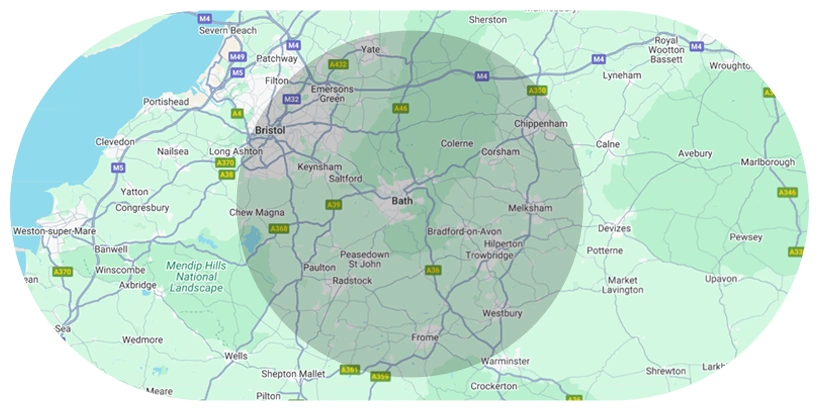
Boiler Finance Bath: Getting Your Budget Ready Before Booking Installation
Replacing a boiler can be a significant household expense, particularly when the existing system has failed unexpectedly or reached the end of its useful life. For some homeowners, spreading the cost through an available finance arrangement may make budgeting easier.

Why you can trust our content
We understand that the boiler industry can be confusing, with plenty of outdated or misleading information. That’s why we rely only on trusted, proven sources to guide our advice and installations:

At a glance
However, finance should be considered alongside the full installation rather than viewed simply as a way to manage the monthly payment. Before agreeing to any arrangement, it is important to understand the total cost, payment schedule, interest or charges, eligibility requirements and what is actually included in the installation.
This guide explains what Bath homeowners should consider when preparing their budget for a new boiler and reviewing any available finance option.
What should you budget for when replacing a boiler?
The first step is to understand the likely overall project cost.
The amount can vary depending on the boiler, installation requirements and condition of the existing heating system. A straightforward replacement may have different requirements from an installation involving relocation, new controls or additional pipework.
Your budget may need to account for:
- The new boiler
- Installation labour
- Controls
- Flue components
- Pipework alterations
- Removal and disposal of the existing boiler
- Additional heating system work
- Testing and commissioning
- Any other work identified during the installation assessment
Understanding the complete project helps you consider finance in context.
If you are unsure what your boiler replacement may involve, discussing the installation requirements with a heating professional can help you establish what needs to be included in your budget.
What does boiler finance actually mean?
Boiler finance generally refers to an arrangement that allows the cost of an installation to be paid over an agreed period rather than as one upfront amount.
The exact structure varies between providers and offers. Depending on the arrangement, factors can include:
- Deposit requirements
- Agreement length
- Interest rate
- Representative APR
- Monthly repayment amount
- Total amount repayable
- Fees or other charges
- Eligibility requirements
- Credit assessment
- Early repayment conditions
These details matter because the monthly payment alone does not tell you the total cost of borrowing.
If you are considering boiler finance bath homeowners should read the full finance information and make sure they understand the agreement before proceeding.
Should you compare the total cost rather than just the monthly payment?
Yes. A lower monthly payment does not necessarily mean a lower overall cost.
For example, extending the repayment period can reduce the amount paid each month while increasing the total amount repaid over the full term, depending on the interest and charges involved.
When reviewing a finance option, look at:
| Detail | Why it matters |
| Amount borrowed | Shows how much of the installation is being financed |
| Deposit | Establishes what you pay upfront |
| Monthly payment | Shows the regular repayment amount |
| Agreement length | Shows how long repayments continue |
| Interest rate | Helps explain the borrowing cost |
| APR | Provides a standardised way to consider the cost of credit |
| Total amount payable | Shows the overall amount due under the agreement |
| Fees | Identifies additional charges |
| Early repayment terms | Explains what happens if you settle early |
This gives you a clearer picture than focusing on the monthly figure alone.
What should you know about the cost of the installation?
Before considering finance, ask for a clear quotation for the actual boiler installation.
The cost for new boiler installation can vary according to the work required at your property. Factors may include boiler type, output, location, controls, pipework and whether the existing system needs additional work.
Ask the installer to clarify:
- Which boiler is included
- What controls are included
- Whether removal of the existing boiler is covered
- Whether flue work is included
- Whether pipework alterations are included
- Whether testing and commissioning are included
- What is excluded from the quotation
- How unexpected additional work would be handled
This helps you understand the amount you are potentially financing.
Let’s get started, Which fuel powers your boiler?
It just takes 30 Seconds
And then you can book a free consultation
Does boiler finance cover every installation cost?
Not necessarily.
The finance arrangement and the installation quotation are related, but they should not be treated as exactly the same thing.
Depending on the agreement, some costs may be included while other work may be separate. Your quotation should make the installation scope clear.
Before accepting anything, check whether the financed amount covers the entire agreed installation or whether you would need to pay additional costs separately.
If additional work becomes necessary, ask how this would affect the overall price and whether it can be added to the existing arrangement.
What should you check before applying for finance?
Before making an application, read the finance information carefully.
Check:
- Who provides the finance
- Whether a credit check is required
- Eligibility criteria
- Minimum or maximum borrowing amounts
- Deposit requirements
- Interest rate and APR
- Repayment term
- Total amount repayable
- Payment frequency
- Any fees
- Cancellation or withdrawal rights
- Early settlement conditions
Finance is a credit commitment, so it is important to understand the agreement rather than making a decision based solely on whether the monthly payment appears affordable.
Can you afford the monthly repayments?
A finance arrangement should fit comfortably within your household budget.
When assessing affordability, consider your regular household expenses as well as other credit commitments and bills.
It can help to look at:
- Current household income
- Essential monthly expenses
- Existing loan or credit repayments
- Energy and utility costs
- Insurance and other regular bills
- Expected boiler repayment
- Potential changes to your household budget
Do not rely on a finance provider’s eligibility decision as the only measure of affordability. You should consider whether the repayments work for your own circumstances.
What happens if the boiler breaks down before you are ready?
A failed boiler can create pressure to make a quick decision, particularly during colder weather.
However, urgency does not mean you should skip the basic checks. If the boiler has failed, ask whether repair is possible and whether replacement is appropriate based on its age, condition and history.
If replacement is recommended, ask for a clear quotation and understand the installation requirements before considering how you will pay for it.
This approach can help you avoid making a financial decision based solely on the immediate pressure of having no heating or hot water.
Is finance available for every boiler installation?
Not necessarily. Finance availability depends on the installer, finance provider, offer and applicant’s circumstances.
Eligibility may depend on factors determined by the finance provider, and approval cannot necessarily be assumed.
If an installer advertises finance, ask:
- Who provides the finance?
- What finance products are available?
- Are there different repayment terms?
- Is a deposit required?
- What is the total amount repayable?
- What are the eligibility requirements?
- Are there any fees or charges?
If you do not qualify for a particular arrangement, the installer may still be able to explain alternative payment options, but these should be assessed separately.
Should you consider the boiler and finance separately?
It can be helpful to separate the two decisions.
First, consider whether the proposed boiler and installation are appropriate for your home. Then consider how the cost could be paid.
This avoids choosing a heating system purely because its finance arrangement has a particular monthly payment.
Your decision should take into account:
The heating system
- Is the boiler suitable for the property?
- Is the output appropriate?
- Are the controls suitable?
- Does the installation plan make sense?
- Are any system alterations required?
The finance arrangement
- How much is being borrowed?
- How much will be repaid overall?
- What is the interest rate and APR?
- How long will repayments continue?
- Are there fees?
- Can the repayments comfortably fit your budget?
Considering both sides separately can make the overall decision clearer.
What should you ask about the quotation before using finance?
The finance amount should relate to a clearly understood installation quotation.
Before proceeding, ask the installer to confirm:
- The exact boiler model
- The complete installation price
- What labour is included
- Whether controls are included
- Whether the old boiler will be removed
- Whether flue work is included
- Whether pipework alterations are included
- What happens if additional work is discovered
- Whether the quoted price includes VAT where applicable
- Which parts, if any, are not included
The more clearly these details are established, the easier it is to understand the amount you may need to finance.
How does finance affect your overall boiler budget?
Finance can change how the cost is distributed over time, but it does not remove the underlying cost of the installation.
For example, you may need to consider:
Upfront cost:
Any deposit or amount that is not financed.
Monthly cost:
The regular repayment required under the agreement.
Total cost:
The amount repaid across the full finance term.
Additional costs:
Any installation work or charges that are outside the financed amount.
This is why the cost for new boiler installation should be considered alongside the finance agreement rather than separately from it.
What should you do if the quotation and finance figures do not match?
Do not assume that the difference is an error.
Ask for an explanation of:
- The installation price
- The amount being financed
- Any deposit
- Any separate payment
- Interest or finance charges
- Any additional products or services
- The total amount repayable
The figures should make sense when viewed together. If you cannot reconcile them, ask the installer or finance provider for clarification before signing an agreement.
What should Bath homeowners check before booking?
Before committing to a boiler replacement using finance, work through this checklist.
| Question | Checked? |
| Is the boiler suitable for the property? | Yes / No |
| Is the complete installation price clear? | Yes / No |
| Is the amount being financed clear? | Yes / No |
| Is the deposit clear? | Yes / No |
| Is the monthly repayment affordable? | Yes / No |
| Is the finance term clear? | Yes / No |
| Is the APR and interest information clear? | Yes / No |
| Is the total amount repayable clear? | Yes / No |
| Are additional charges explained? | Yes / No |
| Are exclusions in the installation quotation clear? | Yes / No |
| Is the installation timescale understood? | Yes / No |
| Are the finance terms understood? | Yes / No |
If any answer is unclear, ask for clarification before agreeing to the installation or finance arrangement.
What if you are not sure whether finance is right for you?
There is no need to base the decision entirely on the monthly payment.
Compare the available payment options against your household budget and consider the total cost over the full term. If you are unsure about the financial implications, you may wish to seek independent financial guidance before entering into a credit agreement.
The heating requirement should also be considered separately. If your existing boiler can be repaired safely and economically, replacement may not necessarily be the immediate option. If replacement is required, understanding the installation scope can help you budget more accurately.
If you are planning a new boiler and want to understand the installation requirements before considering payment options, speak to Ford Plumbing & Heating about your property and proposed system.
What should you do after finance is approved?
Finance approval is not the end of the planning process.
Before installation, make sure you understand:
- The agreed boiler model
- The installation date
- What preparation is required
- What happens to the old boiler
- Which controls will be installed
- What work is included
- What happens if additional work is required
- What documentation you will receive
Keep copies of the quotation and finance agreement for your records.
You should also know who to contact about installation questions and who to contact about questions concerning the finance agreement itself.
Conclusion
Finance can be one way of managing the cost of a new boiler, but the monthly payment should not be the only figure you consider. Before booking, understand the full installation price, what is included, the amount being financed, the repayment term, interest or charges and the total amount repayable.
For Bath homeowners, taking time to review both the heating proposal and the finance agreement can help ensure that the installation and payment arrangements are clearly understood.
If you are considering replacing your boiler, Ford Plumbing & Heating can discuss your heating requirements and explain the installation work involved before you make a decision.
If you are ready to discuss a new boiler for your home, contact Ford Plumbing & Heating to talk through your requirements and request a clear installation quotation.
Related articles
Let’s get started, Which fuel powers your boiler?
At a glance
However, finance should be considered alongside the full installation rather than viewed simply as a way to manage the monthly payment. Before agreeing to any arrangement, it is important to understand the total cost, payment schedule, interest or charges, eligibility requirements and what is actually included in the installation.
This guide explains what Bath homeowners should consider when preparing their budget for a new boiler and reviewing any available finance option.
What should you budget for when replacing a boiler?
The first step is to understand the likely overall project cost.
The amount can vary depending on the boiler, installation requirements and condition of the existing heating system. A straightforward replacement may have different requirements from an installation involving relocation, new controls or additional pipework.
Your budget may need to account for:
- The new boiler
- Installation labour
- Controls
- Flue components
- Pipework alterations
- Removal and disposal of the existing boiler
- Additional heating system work
- Testing and commissioning
- Any other work identified during the installation assessment
Understanding the complete project helps you consider finance in context.
If you are unsure what your boiler replacement may involve, discussing the installation requirements with a heating professional can help you establish what needs to be included in your budget.
What does boiler finance actually mean?
Boiler finance generally refers to an arrangement that allows the cost of an installation to be paid over an agreed period rather than as one upfront amount.
The exact structure varies between providers and offers. Depending on the arrangement, factors can include:
- Deposit requirements
- Agreement length
- Interest rate
- Representative APR
- Monthly repayment amount
- Total amount repayable
- Fees or other charges
- Eligibility requirements
- Credit assessment
- Early repayment conditions
These details matter because the monthly payment alone does not tell you the total cost of borrowing.
If you are considering boiler finance bath homeowners should read the full finance information and make sure they understand the agreement before proceeding.
Should you compare the total cost rather than just the monthly payment?
Yes. A lower monthly payment does not necessarily mean a lower overall cost.
For example, extending the repayment period can reduce the amount paid each month while increasing the total amount repaid over the full term, depending on the interest and charges involved.
When reviewing a finance option, look at:
| Detail | Why it matters |
| Amount borrowed | Shows how much of the installation is being financed |
| Deposit | Establishes what you pay upfront |
| Monthly payment | Shows the regular repayment amount |
| Agreement length | Shows how long repayments continue |
| Interest rate | Helps explain the borrowing cost |
| APR | Provides a standardised way to consider the cost of credit |
| Total amount payable | Shows the overall amount due under the agreement |
| Fees | Identifies additional charges |
| Early repayment terms | Explains what happens if you settle early |
This gives you a clearer picture than focusing on the monthly figure alone.
What should you know about the cost of the installation?
Before considering finance, ask for a clear quotation for the actual boiler installation.
The cost for new boiler installation can vary according to the work required at your property. Factors may include boiler type, output, location, controls, pipework and whether the existing system needs additional work.
Ask the installer to clarify:
- Which boiler is included
- What controls are included
- Whether removal of the existing boiler is covered
- Whether flue work is included
- Whether pipework alterations are included
- Whether testing and commissioning are included
- What is excluded from the quotation
- How unexpected additional work would be handled
This helps you understand the amount you are potentially financing.
Let’s get started, Which fuel powers your boiler?
It just takes 30 Seconds
And then you can book a free consultation
Does boiler finance cover every installation cost?
Not necessarily.
The finance arrangement and the installation quotation are related, but they should not be treated as exactly the same thing.
Depending on the agreement, some costs may be included while other work may be separate. Your quotation should make the installation scope clear.
Before accepting anything, check whether the financed amount covers the entire agreed installation or whether you would need to pay additional costs separately.
If additional work becomes necessary, ask how this would affect the overall price and whether it can be added to the existing arrangement.
What should you check before applying for finance?
Before making an application, read the finance information carefully.
Check:
- Who provides the finance
- Whether a credit check is required
- Eligibility criteria
- Minimum or maximum borrowing amounts
- Deposit requirements
- Interest rate and APR
- Repayment term
- Total amount repayable
- Payment frequency
- Any fees
- Cancellation or withdrawal rights
- Early settlement conditions
Finance is a credit commitment, so it is important to understand the agreement rather than making a decision based solely on whether the monthly payment appears affordable.
Can you afford the monthly repayments?
A finance arrangement should fit comfortably within your household budget.
When assessing affordability, consider your regular household expenses as well as other credit commitments and bills.
It can help to look at:
- Current household income
- Essential monthly expenses
- Existing loan or credit repayments
- Energy and utility costs
- Insurance and other regular bills
- Expected boiler repayment
- Potential changes to your household budget
Do not rely on a finance provider’s eligibility decision as the only measure of affordability. You should consider whether the repayments work for your own circumstances.
What happens if the boiler breaks down before you are ready?
A failed boiler can create pressure to make a quick decision, particularly during colder weather.
However, urgency does not mean you should skip the basic checks. If the boiler has failed, ask whether repair is possible and whether replacement is appropriate based on its age, condition and history.
If replacement is recommended, ask for a clear quotation and understand the installation requirements before considering how you will pay for it.
This approach can help you avoid making a financial decision based solely on the immediate pressure of having no heating or hot water.
Is finance available for every boiler installation?
Not necessarily. Finance availability depends on the installer, finance provider, offer and applicant’s circumstances.
Eligibility may depend on factors determined by the finance provider, and approval cannot necessarily be assumed.
If an installer advertises finance, ask:
- Who provides the finance?
- What finance products are available?
- Are there different repayment terms?
- Is a deposit required?
- What is the total amount repayable?
- What are the eligibility requirements?
- Are there any fees or charges?
If you do not qualify for a particular arrangement, the installer may still be able to explain alternative payment options, but these should be assessed separately.
Should you consider the boiler and finance separately?
It can be helpful to separate the two decisions.
First, consider whether the proposed boiler and installation are appropriate for your home. Then consider how the cost could be paid.
This avoids choosing a heating system purely because its finance arrangement has a particular monthly payment.
Your decision should take into account:
The heating system
- Is the boiler suitable for the property?
- Is the output appropriate?
- Are the controls suitable?
- Does the installation plan make sense?
- Are any system alterations required?
The finance arrangement
- How much is being borrowed?
- How much will be repaid overall?
- What is the interest rate and APR?
- How long will repayments continue?
- Are there fees?
- Can the repayments comfortably fit your budget?
Considering both sides separately can make the overall decision clearer.
What should you ask about the quotation before using finance?
The finance amount should relate to a clearly understood installation quotation.
Before proceeding, ask the installer to confirm:
- The exact boiler model
- The complete installation price
- What labour is included
- Whether controls are included
- Whether the old boiler will be removed
- Whether flue work is included
- Whether pipework alterations are included
- What happens if additional work is discovered
- Whether the quoted price includes VAT where applicable
- Which parts, if any, are not included
The more clearly these details are established, the easier it is to understand the amount you may need to finance.
How does finance affect your overall boiler budget?
Finance can change how the cost is distributed over time, but it does not remove the underlying cost of the installation.
For example, you may need to consider:
Upfront cost:
Any deposit or amount that is not financed.
Monthly cost:
The regular repayment required under the agreement.
Total cost:
The amount repaid across the full finance term.
Additional costs:
Any installation work or charges that are outside the financed amount.
This is why the cost for new boiler installation should be considered alongside the finance agreement rather than separately from it.
What should you do if the quotation and finance figures do not match?
Do not assume that the difference is an error.
Ask for an explanation of:
- The installation price
- The amount being financed
- Any deposit
- Any separate payment
- Interest or finance charges
- Any additional products or services
- The total amount repayable
The figures should make sense when viewed together. If you cannot reconcile them, ask the installer or finance provider for clarification before signing an agreement.
What should Bath homeowners check before booking?
Before committing to a boiler replacement using finance, work through this checklist.
| Question | Checked? |
| Is the boiler suitable for the property? | Yes / No |
| Is the complete installation price clear? | Yes / No |
| Is the amount being financed clear? | Yes / No |
| Is the deposit clear? | Yes / No |
| Is the monthly repayment affordable? | Yes / No |
| Is the finance term clear? | Yes / No |
| Is the APR and interest information clear? | Yes / No |
| Is the total amount repayable clear? | Yes / No |
| Are additional charges explained? | Yes / No |
| Are exclusions in the installation quotation clear? | Yes / No |
| Is the installation timescale understood? | Yes / No |
| Are the finance terms understood? | Yes / No |
If any answer is unclear, ask for clarification before agreeing to the installation or finance arrangement.
What if you are not sure whether finance is right for you?
There is no need to base the decision entirely on the monthly payment.
Compare the available payment options against your household budget and consider the total cost over the full term. If you are unsure about the financial implications, you may wish to seek independent financial guidance before entering into a credit agreement.
The heating requirement should also be considered separately. If your existing boiler can be repaired safely and economically, replacement may not necessarily be the immediate option. If replacement is required, understanding the installation scope can help you budget more accurately.
If you are planning a new boiler and want to understand the installation requirements before considering payment options, speak to Ford Plumbing & Heating about your property and proposed system.
What should you do after finance is approved?
Finance approval is not the end of the planning process.
Before installation, make sure you understand:
- The agreed boiler model
- The installation date
- What preparation is required
- What happens to the old boiler
- Which controls will be installed
- What work is included
- What happens if additional work is required
- What documentation you will receive
Keep copies of the quotation and finance agreement for your records.
You should also know who to contact about installation questions and who to contact about questions concerning the finance agreement itself.
Conclusion
Finance can be one way of managing the cost of a new boiler, but the monthly payment should not be the only figure you consider. Before booking, understand the full installation price, what is included, the amount being financed, the repayment term, interest or charges and the total amount repayable.
For Bath homeowners, taking time to review both the heating proposal and the finance agreement can help ensure that the installation and payment arrangements are clearly understood.
If you are considering replacing your boiler, Ford Plumbing & Heating can discuss your heating requirements and explain the installation work involved before you make a decision.
If you are ready to discuss a new boiler for your home, contact Ford Plumbing & Heating to talk through your requirements and request a clear installation quotation.